The Sacred Divide: Why India's Threshold Holds More Than Just a Doorway

%20is%20just%20about%20to%20touch%20the%20dehleez%2C%20perhaps%20to%20sit%2C%20but%20an%20older%20woman's%20hand%20gently%20stops%20them.%20Focus%20on%20the%20hands%20and%20the%20threshold%2C%20soft%2C%20natural%20light.%2C%20hand-drawn%20vintage%20ink%20sketch%2C%20woodcut%20illustration%2C%20alchemical%20style%2C%20esoteric%2C%20highly%20detailed%2C%20muted%20sepia%20and%20gold%20tones?width=1920&height=1080&model=flux&nologo=true&seed=929872347)


Step into any traditional Indian home, and you might notice a subtle, yet significant, unspoken rule: the threshold, or dehleez (also known as dahleez or dehari in various regions), is not a place to sit. This seemingly simple boundary between the inside and outside of a house carries profound cultural and spiritual weight, embodying a fascinating Indian superstition that has persisted through generations.
The Dahez: A Liminal Realm
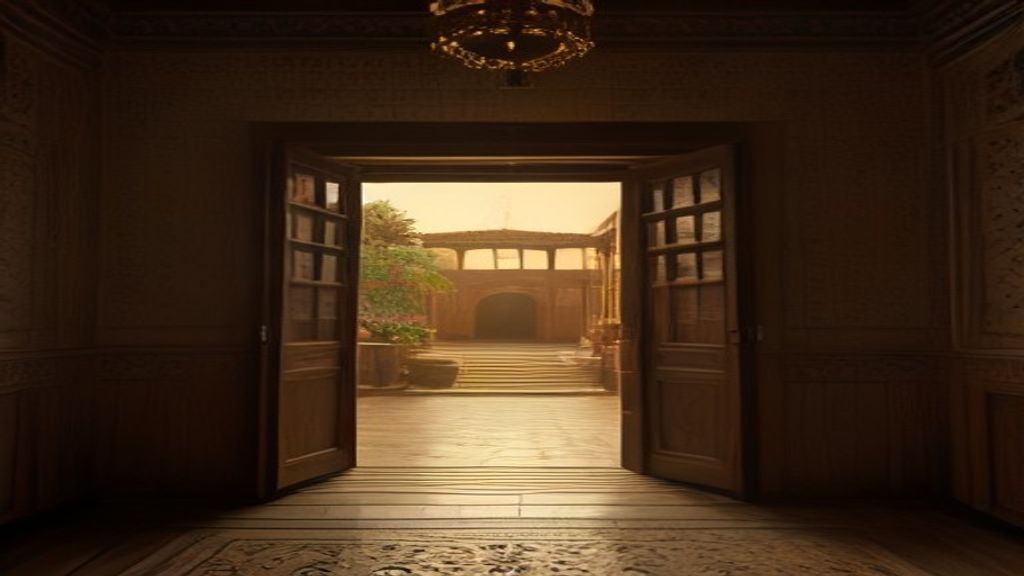
In Indian cosmology, doorways and thresholds are not merely architectural features; they are potent liminal spaces—points of transition between two worlds. The dehleez is considered the abode of household deities, particularly Lakshmi, the goddess of wealth and prosperity, and sometimes even ancestral spirits. It's a sacred frontier, a protective barrier that seals the home from external negativities and invites auspicious energies within.
Why Not Sit Upon the Dehleez?
The core of this superstition lies in the belief that sitting on the threshold can disrupt this delicate balance. Here are the primary reasons deeply ingrained in Indian folklore:
- Blocking Goddess Lakshmi: Many believe that sitting on the dehleez obstructs the path of Goddess Lakshmi as she enters the home, turning away prosperity and good fortune. It's seen as disrespecting her divine presence.
- Inviting Negative Energies: As a liminal space, the threshold is also considered a potential entry point for malevolent spirits or negative energies. Sitting there might make a person vulnerable to their influence, or worse, inadvertently invite them into the home.
- Causing Household Discord: Some traditions link sitting on the dehleez to promoting arguments and disagreements within the family. It's thought to create friction and imbalance in the home's harmony.
- Disrespect to Elders and Ancestors: In some regions, the threshold is also revered as a symbol of the family's lineage and the wisdom of elders. Sitting on it can be perceived as an act of disrespect towards those who have built and maintained the home.
More Than Just a Doorstep
Beyond the warnings, the dehleez is often adorned with auspicious symbols—rangoli, turmeric, or vermillion—especially during festivals, further emphasizing its sacred status. It's a space for welcoming guests with warmth and performing small protective rituals. This belief encourages a mindful interaction with our living spaces, reminding us that even the simplest architectural elements can hold deep spiritual significance and shape our daily lives.
So, the next time you approach a doorway in an Indian home, remember the sacred divide. It's a silent sentinel, guarding not just the physical space, but the very essence of its inhabitants' fortune and peace.