The Hoot of Fate: Decoding the Owl's Mysterious Message in Indian Lore
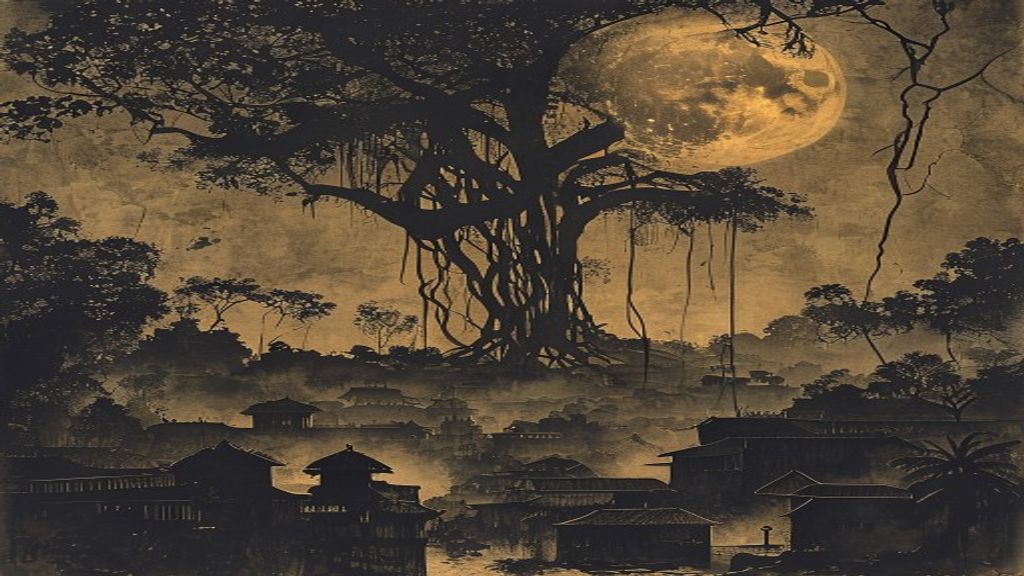


%20peacefully%20asleep%20on%20charpais%20within%20their%20traditional%2C%20simple%20village%20home%2C%20bathed%20in%20soft%2C%20silvery%20moonlight%20filtering%20through%20an%20open%20window.%20The%20atmosphere%20is%20calm%20and%20protected.%20A%20faint%2C%20distant%20owl%20hoot%20is%20heard%2C%20conveying%20serenity%20and%20acceptance%20of%20fate.%20Hopeful%20and%20reverent.%2C%20hand-drawn%20vintage%20ink%20sketch%2C%20woodcut%20illustration%2C%20alchemical%20style%2C%20esoteric%2C%20highly%20detailed%2C%20muted%20sepia%20and%20gold%20tones?width=1920&height=1080&model=flux&nologo=true)
The night holds many secrets, whispered on the wind and carried by the creatures that emerge when the sun sets. In India, few sounds are as loaded with mystery and ancient lore as the hoot of an owl. This nocturnal sentinel, with its piercing gaze and solemn cry, has for millennia been both revered and feared, weaving itself into the very fabric of our superstitions and spiritual beliefs.
The Owl's Dual Nature: Goddess Lakshmi's Mount
In the vast tapestry of Hindu mythology, the owl holds a prominent and often auspicious place. It is famously depicted as the 'vahana' or divine vehicle of Goddess Lakshmi, the deity of wealth, prosperity, and fortune. Thus, for many, hearing an owl's hoot, especially near one's home, is interpreted as a harbinger of good luck and financial gain. The presence of the owl is believed to be an indirect blessing from Lakshmi herself, signaling that prosperity is on its way. In some parts, the sight of an owl, particularly a white owl, during certain festivals or auspicious times, is considered extremely propitious.
Whispers of the Dark: Omens of Misfortune
Yet, the owl's message is not always one of bounty. Across different regions and traditions in India, its hoot can also be a chilling omen, portending ill luck, sickness, or even death. The solemn, echoing call from the darkness is sometimes seen as a communication from the spirit world, a warning of impending tragedy. In certain folklore, an owl hooting repeatedly from a specific direction is believed to indicate a death in the family or community. The very enigma of its nocturnal habits and silent flight contributes to this darker association, making it a creature of both light and shadow in the popular imagination.
Regional Variations and Interpretations
The interpretation of an owl's hoot varies significantly across India. What might be a sign of great fortune in one village could be a grave warning in another. These diverse beliefs often stem from local deities, ancient tribal wisdom, and unique historical narratives. Some communities believe that the number of hoots, the direction from which the sound comes, or even the type of owl can alter the omen entirely. This rich, complex interplay of local lore ensures that the owl remains one of the most fascinating and enigmatic creatures in Indian superstition.
Whether a messenger of wealth or a harbinger of sorrow, the owl's hoot continues to captivate and mystify, reminding us that the natural world often holds secrets deeper than we can imagine, waiting to be deciphered by those who listen closely to the whispers of fate.