The Sacred Shatter: Decoding the Coconut's Oracle in Indian Lore


%20from%20a%20brass%20thali%2C%20outside%20a%20temple%20entrance%20in%20soft%20morning%20light.%20Peaceful%20and%20blessed%20scene.%2C%20hand-drawn%20vintage%20ink%20sketch%2C%20woodcut%20illustration%2C%20alchemical%20style%2C%20esoteric%2C%20highly%20detailed%2C%20muted%20sepia%20and%20gold%20tones?width=1920&height=1080&model=flux&nologo=true)
The Mystical Significance of the Nariyal Todna
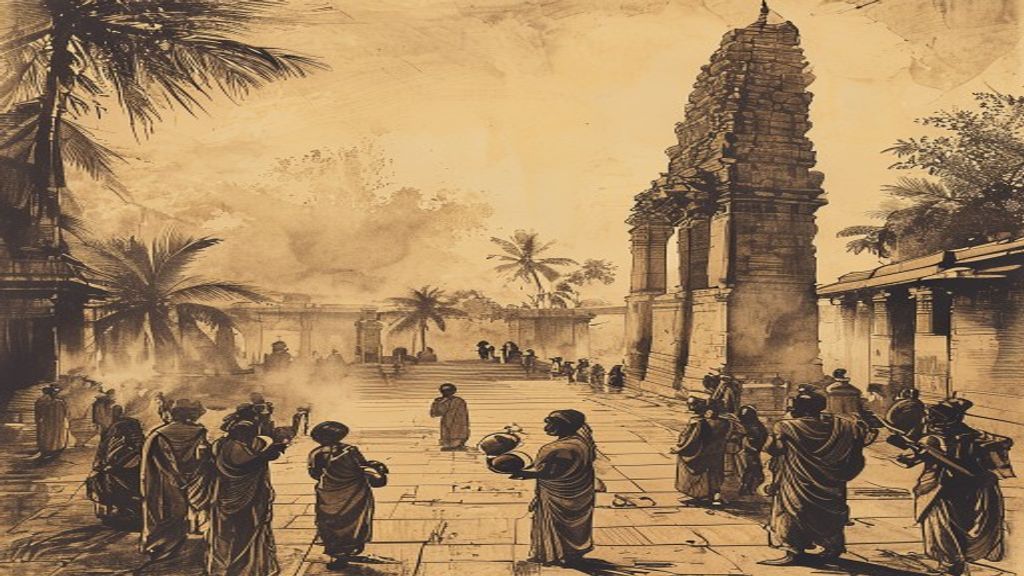
Walk through any Indian village, bustling city temple, or even witness a new construction site, and you're likely to encounter the profound ritual of nariyal todna – the breaking of a coconut. Far from a mere act of preparing a fruit, this tradition is deeply steeped in superstition, faith, and the belief that the coconut holds whispered secrets about our destiny.
For centuries, the coconut has been revered in India as a 'fruit of the gods' (kalpavriksha), symbolizing purity, prosperity, and divinity. Its hard outer shell represents the human ego and the material world, while the pristine white kernel and sweet water within signify the soul and inner purity. Breaking it open is thus an act of surrendering one's ego to the divine, a plea for blessings, and a symbolic gesture of overcoming obstacles.
Omens in the Shatter: What Does Your Coconut Say?
- The Clean Break: If the coconut splits into two relatively equal halves with a satisfying crack, it’s considered an extremely auspicious sign. This heralds good fortune, success in new ventures, and the smooth removal of any obstacles. It’s a clear 'yes' from the universe.
- The Uneven Crack: A coconut that breaks into many small, fragmented pieces, or refuses to split cleanly, is often interpreted as a warning. It might suggest challenges ahead, potential delays, or the need for extra caution in one's endeavors. It’s not necessarily bad luck, but a call to be mindful.
- The Water Within: The clarity of the coconut water is also observed. Pure, clear water is a harbinger of good health, purity of intention, and blessings. Cloudy or discolored water can be a cause for mild concern, often prompting further prayers or introspection.
- The Kernel's Condition: A perfectly white, fresh kernel inside signifies abundance and good health for the family. Any signs of spoilage are taken as an unfortunate omen, suggesting potential misfortune or obstacles.
Beyond Superstition: A Cultural Tapestry
While often seen as a superstition, the breaking of the coconut is also a profound act of devotion and hope. It’s an offering to deities like Lord Ganesha, the remover of obstacles, and an integral part of nearly every Hindu ceremony, from weddings to housewarmings. The act instills a sense of purpose and belief, grounding individuals in their faith as they embark on new chapters. Once broken, the coconut pieces are often distributed as prasad (a religious offering), shared among devotees as a symbol of shared blessings and communal harmony. So, the next time you hear that distinctive crack, remember it’s not just a fruit breaking, but a conversation with the cosmos, a timeless Indian tradition unfolding.